Destination · Altai Tavan Bogd National Park
Khoton & Khurgan Lakes
Twin alpine lakes below the snow peaks of the Mongolian Altai, where Kazakh herding families spend the summer.
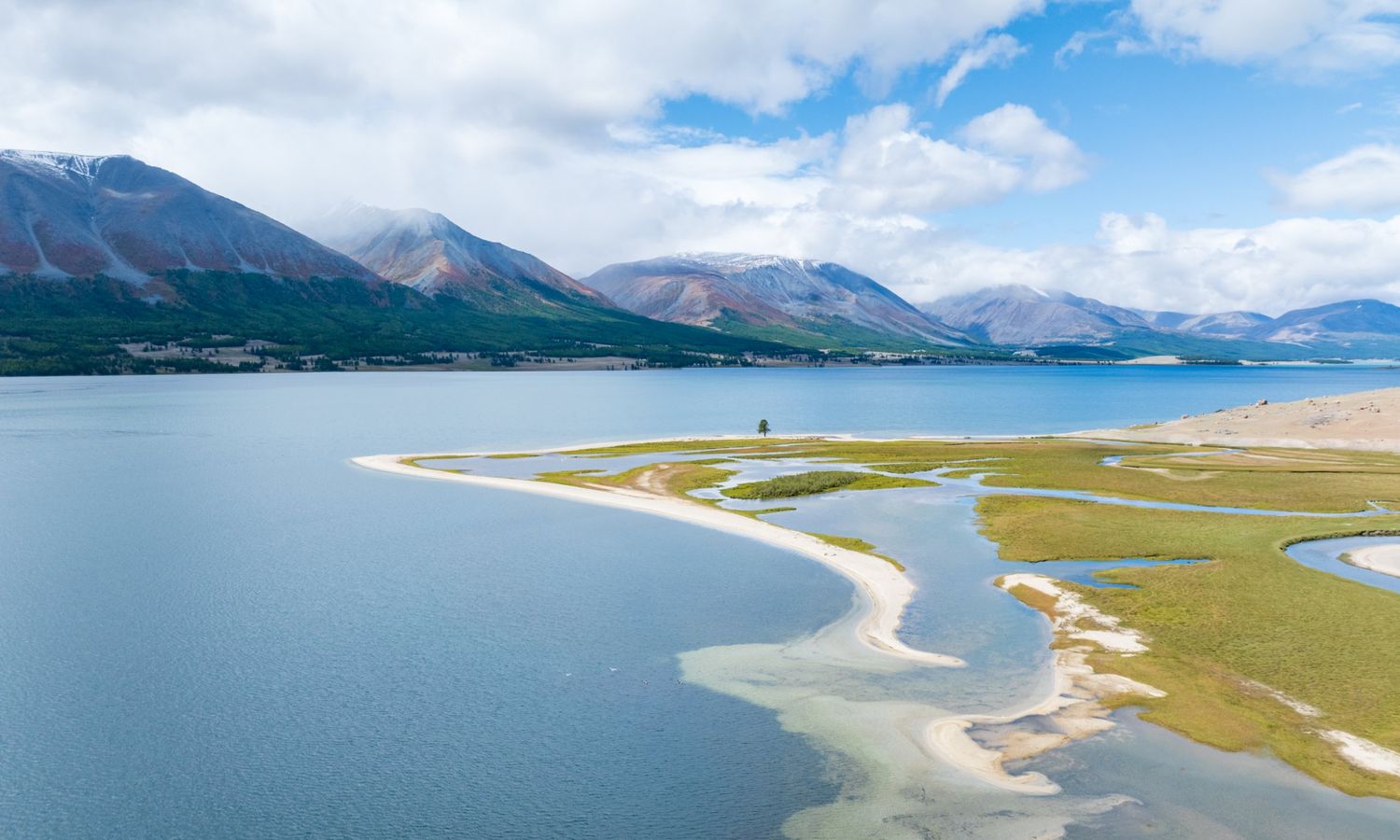
Above: Khoton Lake in late August, with the lone tree near the Biluut Tolgoi rock art, a favourite photography spot. Drone footage: Sayat Travel.
Where
Altai Tavan Bogd National Park, Bayan-Ölgii
Elevation
Around 2,000 m
From Ölgii
About 160 km by 4×4
Trip season
Late May to mid-October
The lakes · Things to do · Culture · When to go · Getting there · Tours · FAQ
Khoton and Khurgan Lakes lie side by side in a valley in Tsengel district, in the far west of Bayan-Ölgii province, inside Altai Tavan Bogd National Park. They sit at around 2,000 m, about 160 km from Ölgii. Snow-capped mountains rise to the south, rivers fed by Altai meltwater run down from the surrounding valleys, and in summer the shores fill with the gers and herds of nomadic families.
You may also see the names written Khoton Nuur and Khurgan Nuur, or Hoton and Hurgan Nuur. Nuur is the Mongolian word for lake.

Why visit Khoton and Khurgan Lakes
This is one of the most peaceful corners of Western Mongolia. Big mountain scenery meets everyday nomadic life, and with no paved roads and no fences around the lakes, you are free to ride and walk. Many Kazakh families bring their animals here for the summer, and people from Ölgii with family ties to the area often spend their holidays by the lakes.
- Photograph the lakes as the ice breaks up, in summer green or in autumn gold
- Ride or hike along open shorelines with snow peaks on the horizon
- Visit Kazakh families at their summer camps and see the Biluut Tolgoi rock art
The lakes at a glance
- Elevation: around 2,000 m
- Size: Khoton Lake about 50 km², Khurgan Lake about 71 km²
- Connection: a channel about 1 km long joins the two lakes
- River: the lakes are part of the headwaters of the Khovd River, which flows about 516 km east to Khar-Us Lake
- Distance: about 160 km from Ölgii
Rivers, landscape and wildlife
The lakes are fed by meltwater from the Altai Tavan Bogd range and by mountain rivers flowing in from the surrounding valleys, including the Ak-Su, Elikti, Jagashtai, Baga Turgen and Ikh Turgen. Around them you will find lakes, rivers, mountains and larch forest, a landscape that supports a surprising amount of wildlife.
Animals you may see in the area include ibex, marmots, golden eagles, wolves, brown bears, lynx and hares, especially in the cooler seasons. Swans and ducks gather on open water as the ice melts. Sightings are never guaranteed.

Things to do at Khoton and Khurgan Lakes
Most of our trips through the area stop at the lakes for photography, cultural visits, horse riding and hiking. What you do there depends on each tour’s itinerary, so check the day-by-day plan or ask us.

Photography
Still water, snow peaks and big skies make the lakes a natural subject. The lone tree near the Biluut Tolgoi rock art on Khoton Lake is a favourite spot, and autumn is a particularly good time for photography. Ask your guide before photographing people or their homes.
Drones can be flown away from the border and other restricted areas. Rules can change, so check current local restrictions before you fly.

Horse riding
Horseback riding is available in the area. Horses and a guide can be arranged, and horse rentals are available at Turgen Waterfall.

Hiking
Walk the shoreline between the lakes and climb to viewpoints over the Altai peaks.

Join a seasonal migration
In summer and autumn, you may be able to join local nomadic families on their seasonal migrations as they move their herds to new pasture. Timing depends on the families, so ask us about dates when you plan your trip.


Camping by the water
On our treks you camp on the lakeshore. Nights are cold even in summer, so bring a warm sleeping layer.

Fishing
Fishing is allowed only during the permitted fishing season, with a fishing permit. It is not allowed in spring. We can help you arrange the permit.
Ice bathing
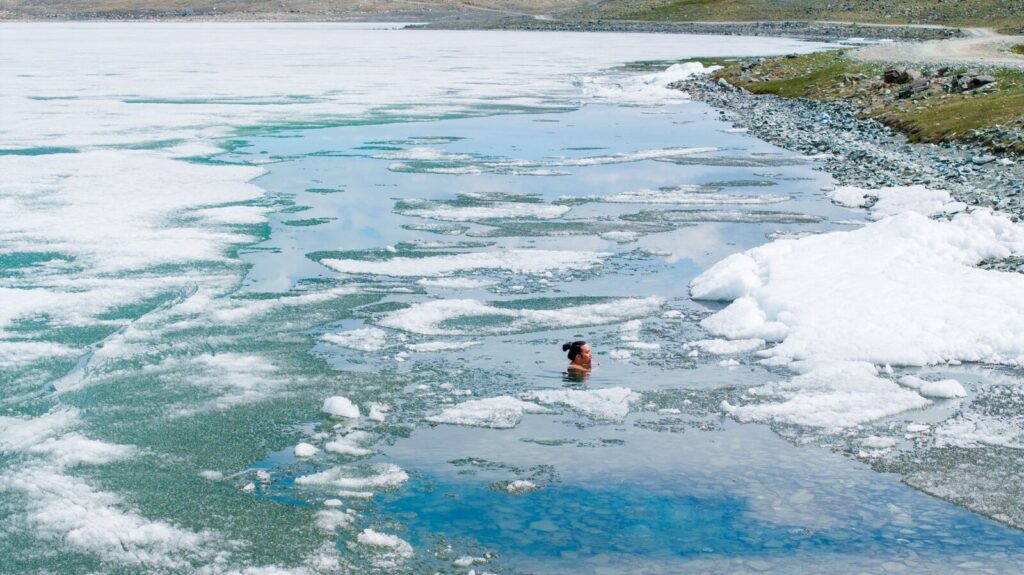
Ice bathing is also practised in the area around the time of the seasonal migrations.
Culture and history around the lakes
In summer, Kazakh herding families set up gers on the pastures around the lakes. Turgen Valley, near the southern part of Khoton Lake, is where nomadic families have their summer pastures. With your guide you can visit a family at their summer camp, share tea in the ger and see how herding life moves with the seasons.


Visiting with respect
- Ask your guide before photographing anyone.
- Visit a family only when your guide has arranged it.
- Bring small, practical gifts.
- Take tea with your right hand.
- Enter the ger and keep to the left-hand side.
There are no general fences around the lakes. The few fenced patches you may see are meadows where families reserve grass for winter and keep their animals from grazing there.

Biluut Tolgoi rock art
On the eastern shore of Khoton Lake, the rock carvings at Biluut Tolgoi show large animal figures carved into smooth rock. Our trips visit the site. Biluut is a separate rock-art site and is not part of the UNESCO-listed Petroglyphic Complexes of the Mongolian Altai. Please don’t touch, trace or chalk the carvings.

Best time to visit
Our trips to the lakes run from the thaw in late May to mid-October.
Thaw: late May to early June
The ice breaks up on Khoton Lake, leaving floes and calm water below the snowy peaks. Fishing is not allowed in spring.

Summer: June to August
The valleys are green, the mountain passes are open and nomadic families are in their summer pastures. Nights can be cold even in summer, so bring warm layers.
Autumn: late August to mid-October
The larches turn gold and fresh snow dusts the peaks. Autumn is a particularly good time for photography, and families move their herds on the autumn migrations.


Getting there and permits
Trips to the lakes start in Ölgii, the provincial centre, which you reach by domestic flight from Ulaanbaatar. The lakes are about 160 km from Ölgii by 4×4 on unpaved roads.
You need a permit to travel in this border area, and it must be obtained in advance from the military base in Ölgii. On our tours we arrange the permit for you, and park entrance and permit fees are included.
Tours to the lakes and Altai Tavan Bogd
Small groups of 2–10, led by Sayat’s own guides.
Altai Traverse: Trekking & Eagle Hunters
12 days · Challenging · From USD 2,490
At the lakes: days 5–6
Malchin Peak, Khoton and Khurgan Lakes, Tsagaan Salaa petroglyphs and a two-night eagle hunter homestay.
Khuiten Peak Summit Climb
7 days · Challenging · July–August · From USD 2,800
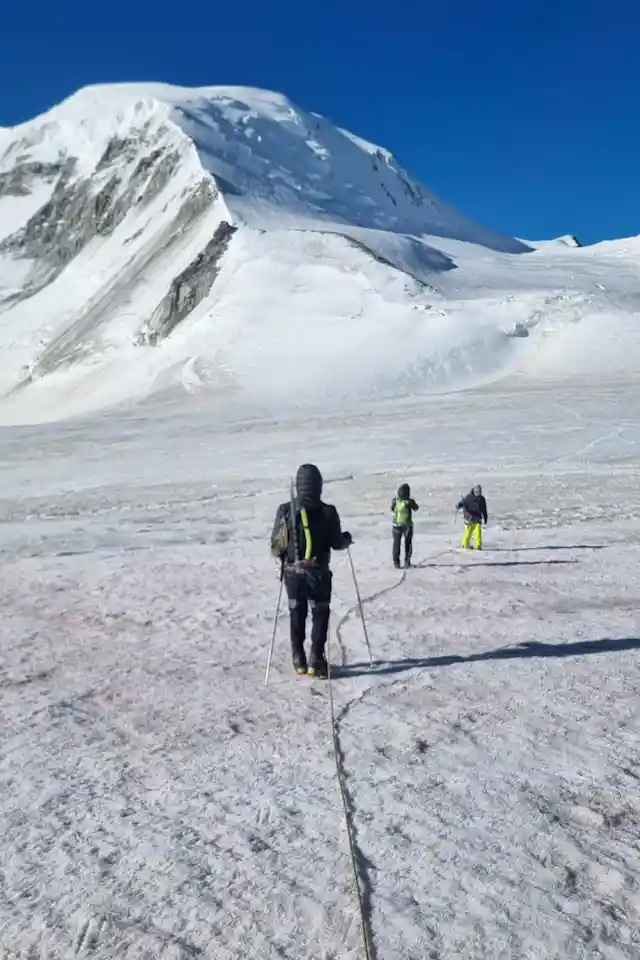
A guided climb of Khüiten Peak (4,374 m), Mongolia’s highest point, crossing the Potanin Glacier in Altai Tavan Bogd National Park.
Want more time at the lakes, a seasonal migration, or a thaw or autumn photography trip? Ask us about a private trip.
Khoton and Khurgan Lakes: FAQ
Where are Khoton and Khurgan Lakes?
In Tsengel district, Bayan-Ölgii province, in the far west of Mongolia, inside Altai Tavan Bogd National Park. They sit at around 2,000 m, about 160 km from Ölgii.
How do I get to the lakes?
Fly from Ulaanbaatar to Ölgii, then travel about 160 km by 4×4 on unpaved roads. Our trips start and end in Ölgii.
Do I need a permit?
Yes. You need a permit to travel in this border area, obtained in advance from the military base in Ölgii. On our tours we arrange it for you, and the fees are included.
When is the best time to visit?
Our trips run from the thaw in late May to mid-October. Summer is greenest, with families on their summer pastures. Autumn, from late August to mid-October, is a particularly good time for photography.
Can I fish at the lakes?
Only during the permitted fishing season, with a fishing permit. Fishing is not allowed in spring. We can help you arrange the permit.
Can I fly a drone?
Drones can be flown away from the border and other restricted areas. Rules can change, so check current local restrictions before you fly.
Explore nearby
- Altai Tavan Bogd National Park: Khüiten Peak, the Potanin Glacier and the Mongolian Altai rock art
- Altai Mountains: the wider range across western Mongolia
- Bayan-Ölgii: Mongolia’s Kazakh province and home of the eagle hunters
- Western Mongolia: eagle hunters, nomadic families and the Altai’s highest peaks
Plan your trip to Khoton & Khurgan Lakes
Come for the ice breaking up in late spring, the green summer pastures or the gold of autumn. Our guides grew up in these valleys and arrange the permit, transport, camps and horses, so you can simply enjoy the lakes.
Tell us your dates, group size and what you’d like to do, and we’ll help you build the right trip.
Or WhatsApp us: +976 9942 5394