Destination · Western Mongolia
Altai Mountains, Mongolia
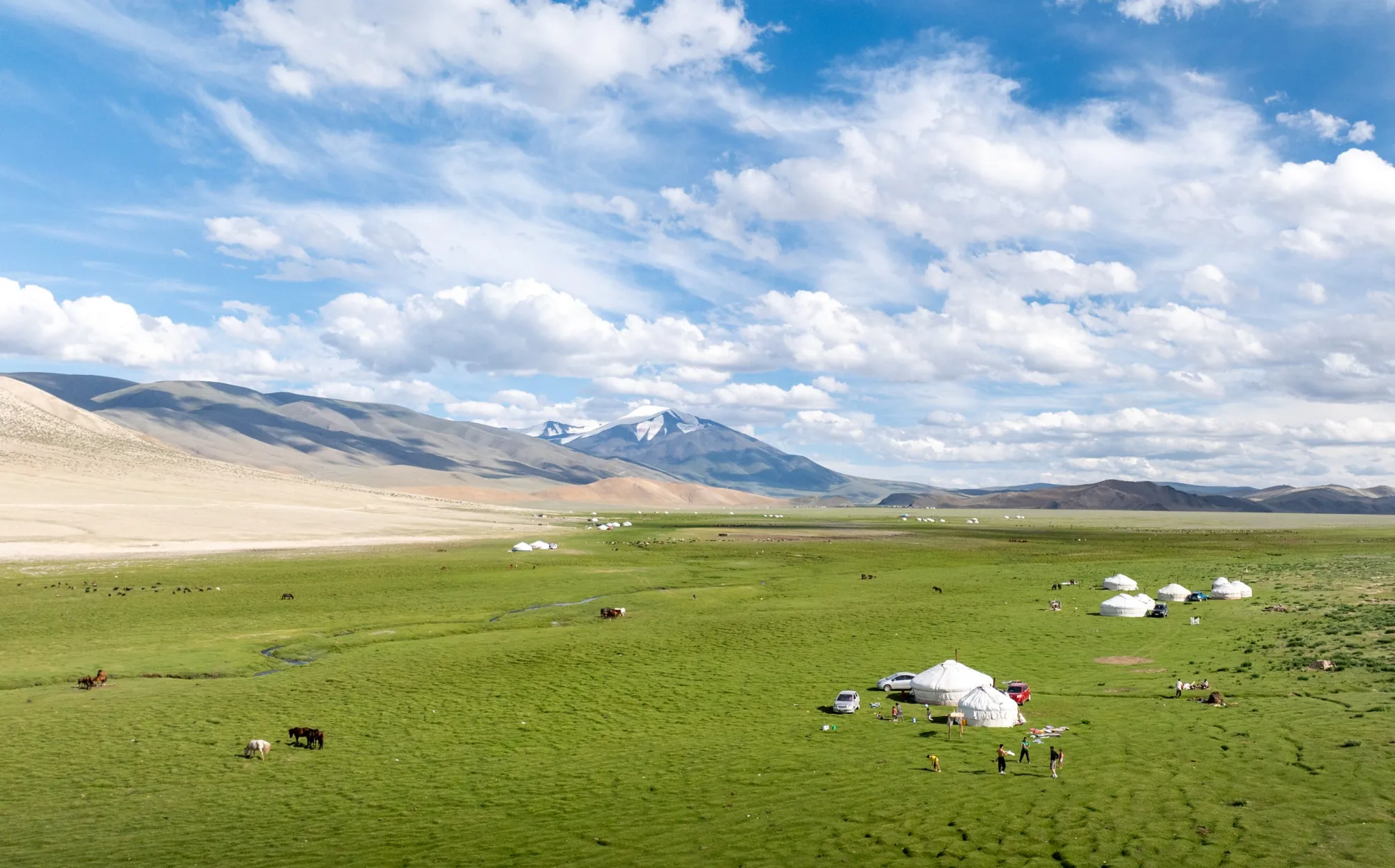
Glaciers, high summer pastures and Kazakh eagle-hunting culture in the mountain range that defines western Mongolia.
Photo: Yerlan Sh / Sayat Travel.
Where
Western Mongolia, on the Russian and Chinese borders
Highest point
Khüiten Peak, 4,374 m
Gateway
Ölgii, by domestic flight from Ulaanbaatar
When to go
June–September for trekking; mid-February–April for the winter migration
The range · What to see · People · Things to do · When to go · Getting there · Is it for me? · Tours · FAQ
Where are the Altai Mountains?
The Altai Mountains are a mountain system in Central Asia shared by Russia, Kazakhstan, China and Mongolia. In Mongolia, the range begins at the country’s far western tip, where the borders of Mongolia, Russia and China meet, and runs southeast along the Chinese border. Further east, the lower Gobi Altai carry on into the Gobi. The name is usually traced to the Turkic-Mongolian word for “golden”.
In Mongolia, the Altai is the country’s highest and most glaciated terrain. It culminates in the Tavan Bogd massif in Altai Tavan Bogd National Park, home to Khüiten Peak (4,374 m), Mongolia’s highest point, and the Potanin Glacier, its longest. Most travellers explore the range from Ölgii, the main town of Bayan-Ölgii province.
The mountains shape everything about life here: the nomadic herding routes, the Kazakh eagle-hunting tradition and the short, intense summer travel season.

Why visit the Altai Mountains?
For travellers who want real mountains rather than Mongolia’s more familiar rolling steppe, the Altai is the range that delivers them, with a still-living nomadic culture in its valleys.
- Mountain scenery: glaciers, scree ridges, alpine lakes and larch forest
- Nomadic life: Kazakh, Mongolian and Tuvan herding families on their seasonal pastures
- Eagle hunters: the Kazakh tradition of hunting with golden eagles, still practised every winter
- Ancient rock art: petroglyphs recording thousands of years of life in these valleys
What is there to see in the Altai Mountains?
The Mongolian Altai covers a huge area, and each part of the range has its own character. These are the places our trips visit most.

Tavan Bogd, Khüiten Peak and the glaciers
The “Five Saints” massif holds Mongolia’s highest summits and the Potanin Glacier. In summer, trekkers can reach Malchin Peak (4,050 m) on a non-technical hike; Khüiten Peak is a guided glacier climb.

Khoton and Khurgan Lakes
Twin alpine lakes at around 2,000 m in the south of the national park, with Kazakh families’ summer camps along the shores, the Biluut rock art and the Turgen Valley nearby.
Khoton & Khurgan Lakes: things to do, when to go and getting there →

Rock art and ancient sites
The Petroglyphic Complexes of the Mongolian Altai are a UNESCO World Heritage property with three sites in Bayan-Ölgii. UNESCO describes their rock carvings and funerary monuments as illustrating the development of culture over 12,000 years. The Altai Traverse visits Tsagaan Salaa–Baga Oigor.

Valleys, rivers and high pastures
Between the peaks lie wide valleys, glacial rivers and the summer pastures of Kazakh and Mongolian herding families. These valleys are where you ride, hike and camp, and where you visit families at their summer camps.
Who lives in the Altai Mountains?
Bayan-Ölgii, at the western end of the Mongolian Altai, is Mongolia’s westernmost province and the centre of the country’s Kazakh minority. Kazakh and Mongolian families herd their animals across the valleys, moving between winter camps and summer pastures with the seasons, and Tuvan herding families live in the high valleys of Altai Tavan Bogd.
The Altai is also home to the Kazakh eagle hunters, who still hunt with golden eagles each winter. You can meet a family in their own valley on a homestay, watch the hunters compete at the Golden Eagle Festival in early October, or travel with a family on their winter migration.
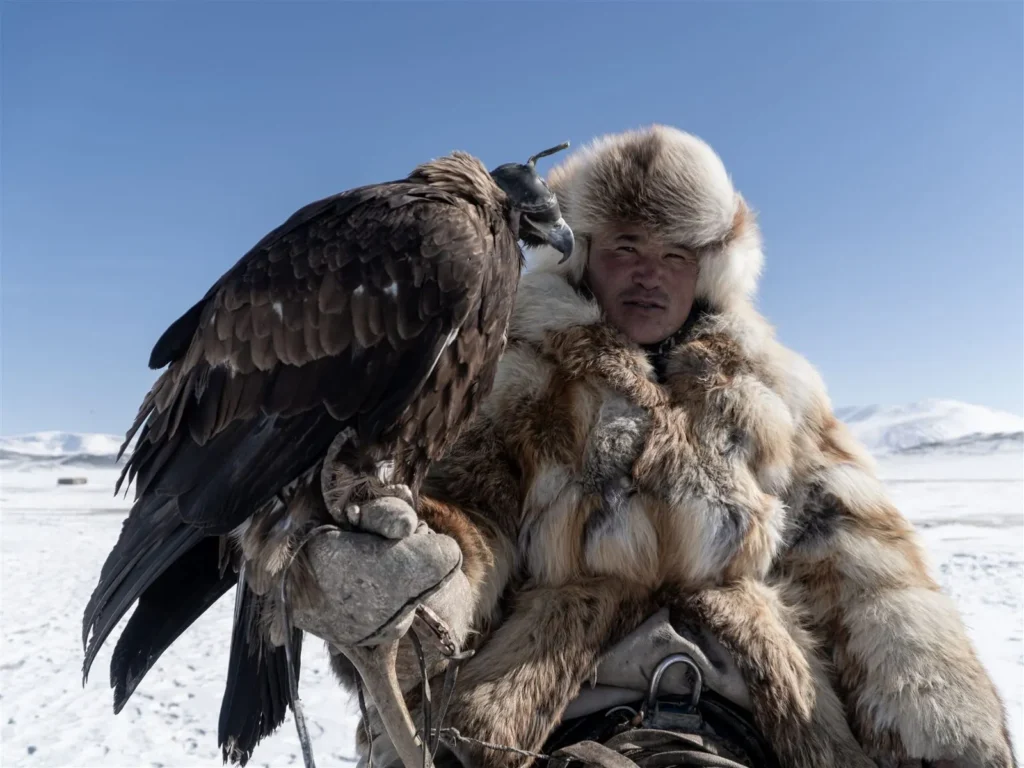

Please ask your guide before photographing people or their homes.
Things to do in the Altai Mountains
- Trek through alpine valleys and over high passes, camping beside glacial rivers, on the Altai Traverse.
- Climb Khüiten Peak, Mongolia’s highest point, on a guided summit climb in July or August.
- Ride across the valleys with local herding families, with short outings for first-time riders on our Nomad Homestay trip.
- Stay with an eagle hunter family and learn how they train and care for their golden eagles.
- Go to a festival: the Golden Eagle Festival in early October, or the regional Naadam in Ölgii in summer.
- Photograph the winter migration as a Kazakh family moves its herds to spring pasture, on our migration photography expedition.
- See the rock art at Tsagaan Salaa and the other petroglyph sites.
- Relax by the lakes at Khoton and Khurgan, with riding, hiking and camping on the shore.

When is the best time to visit the Altai Mountains?
Most travel happens from June to September, when the mountain passes are clear and families are on their summer pastures. Each season suits a different kind of trip.
June–September
Summer · trekking, riding and homestays
The main season for trekking, riding, camping and family stays. Khüiten Peak climbs run in July and August, and Malchin Peak is usually most stable from late July to early September. Snow can linger on high passes until early July.
September–October
Autumn · eagle festivals
The Sagsai festival is typically in mid-September and the main Golden Eagle Festival in Ölgii in early October. Dates vary by year. Larches turn gold and nights get colder.
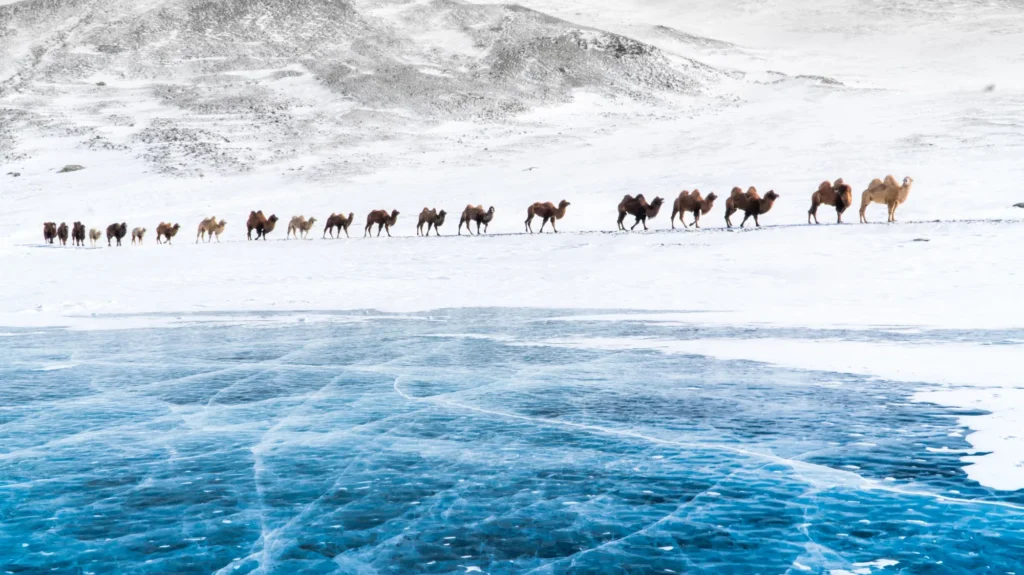
Mid-February–April
Winter · the eagle hunters’ migration
Eagle-hunting families move their herds from winter camps to spring pastures. Exact dates depend on the weather and on each family. Conditions are severe and travel is more demanding.
Nights are cold even in summer, and the weather changes quickly at altitude, so bring warm layers whatever the season.
How do you get to the Altai Mountains?
The Altai is remote. Allow for a domestic flight, a long off-road drive and a border-zone permit before your first day in the mountains.
1 · Fly to Ölgii
From Ulaanbaatar, MIAT flies direct to Ölgii on Wednesdays and Saturdays, and there are flights to neighbouring Khovd on Tuesdays, Fridays and Sundays. Schedules can change from season to season.
2 · Drive by 4×4
Our trips start and end in Ölgii, where you meet the crew. Roads into the mountains are unpaved: Altai Tavan Bogd is about 6 hours (180 km) off-road, and Khoton and Khurgan Lakes about 160 km.
3 · Permits
You need a permit to travel in the border area, and there is a park entrance fee for Altai Tavan Bogd. On our tours we arrange the permit for you, and the fees are included.
Is an Altai Mountains trip right for me?
You don’t need to be a mountaineer. Our Altai trips range from easy family homestays to challenging treks, and only the Khüiten Peak climb is technical.
- Altitude: Malchin Peak base camp sits at about 3,000 m; Khüiten Peak reaches 4,374 m.
- Effort: trekking days are long, on foot and on horseback, with river crossings.
- Glaciers: the Potanin Glacier has crevasses, so cross it only with a local mountain guide and the right equipment.
- Nights: gers, tents, family homestays and local guesthouses. Nights are cold, so bring a warm sleeping layer.
- Group size: small groups of 2–10, led by Sayat’s own guides.
Altai Mountains tours
Compare by season, length and difficulty. Each card links to the full itinerary.
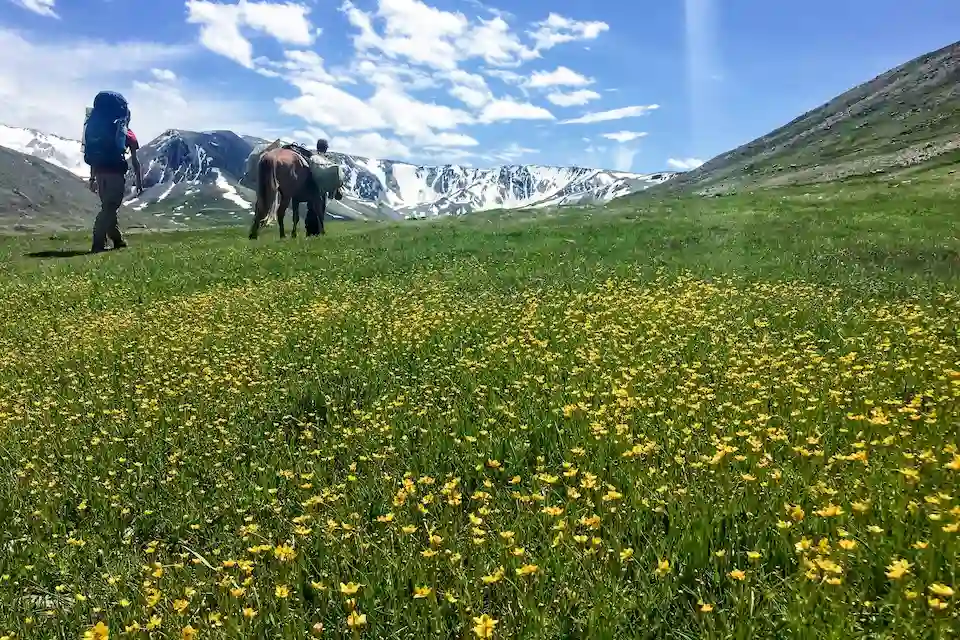
Altai Traverse: Trekking & Eagle Hunters
12 days · Challenging · From USD 2,490
Malchin Peak, Khoton and Khurgan Lakes, the Tsagaan Salaa petroglyphs and a two-night eagle hunter homestay.
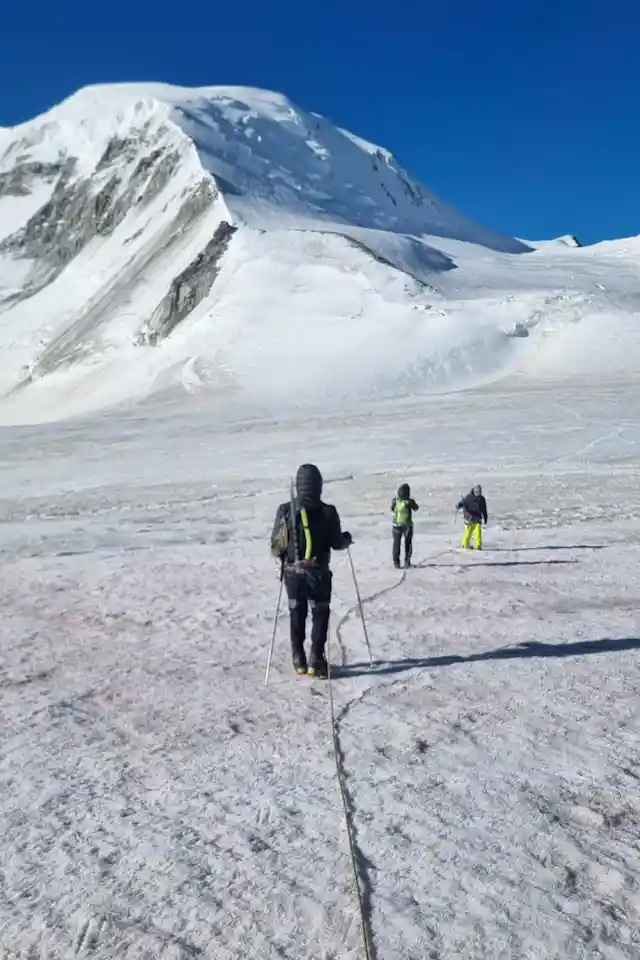
Khuiten Peak Summit Climb
7 days · Challenging · July–August · From USD 2,800
A guided climb of Khüiten Peak (4,374 m), Mongolia’s highest point, crossing the Potanin Glacier.
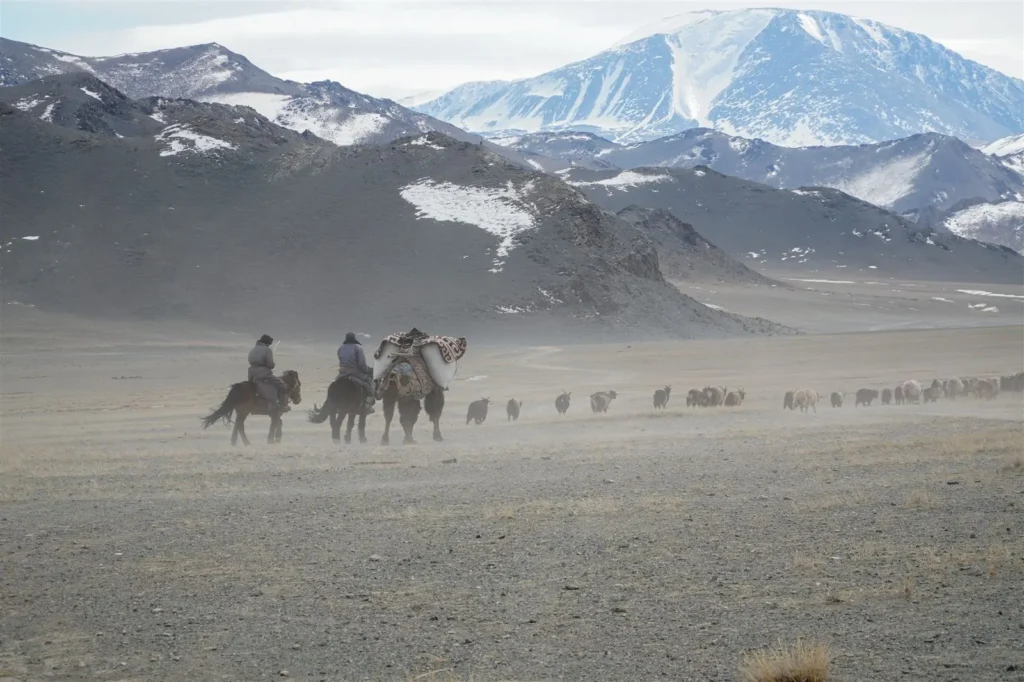
Eagle Hunters Migration Photography Expedition
10 days · Moderate · From mid-February · From USD 3,200
Travel with a Kazakh eagle-hunting family as they move their herds from winter camp to spring pasture.
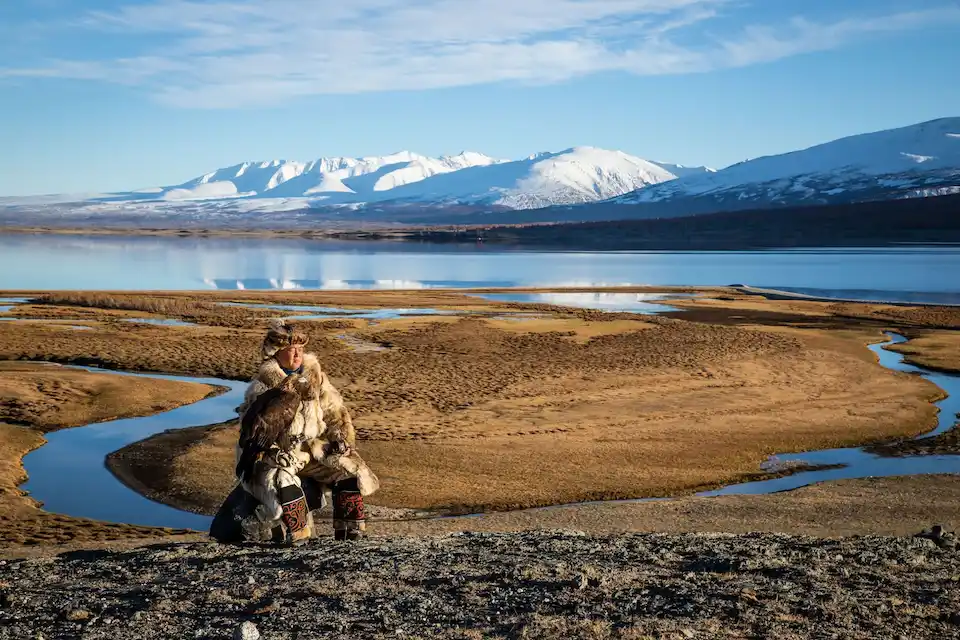
Golden Eagle Festival Experience
7 days · Easy · Early October · From USD 1,800
Two full days at the festival, then a stay with an eagle hunter’s family away from the crowds.
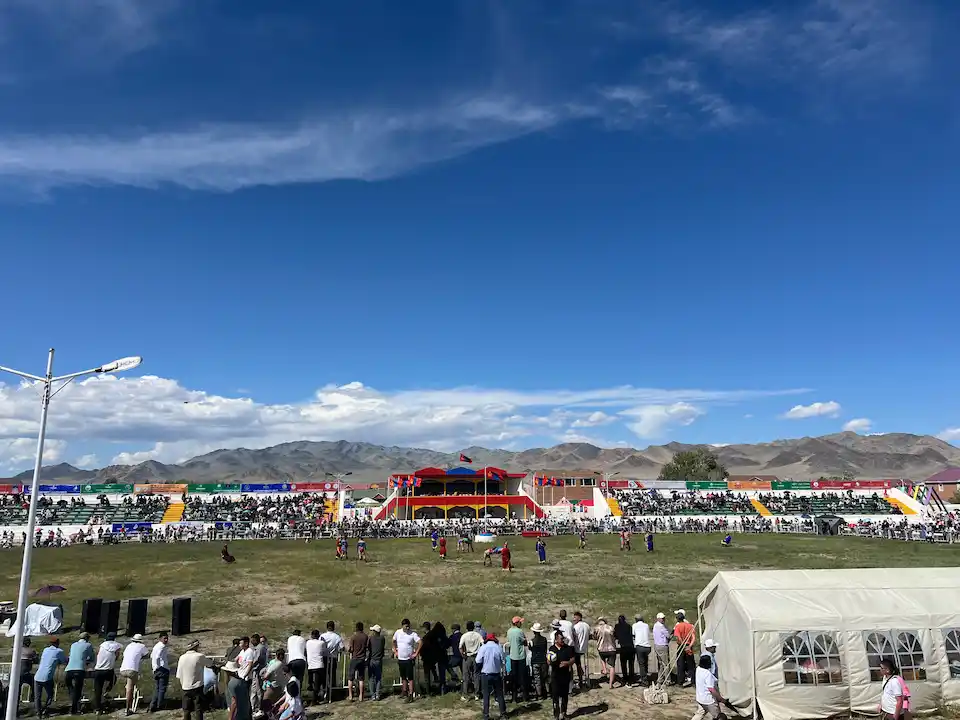
Naadam Festival & Eagle Hunters Trek
11 days · Moderate · Summer · From USD 2,200
Eagle hunter families, horseback riding in Altai Tavan Bogd, camping by Khoton Lake and the regional Naadam in Ölgii.
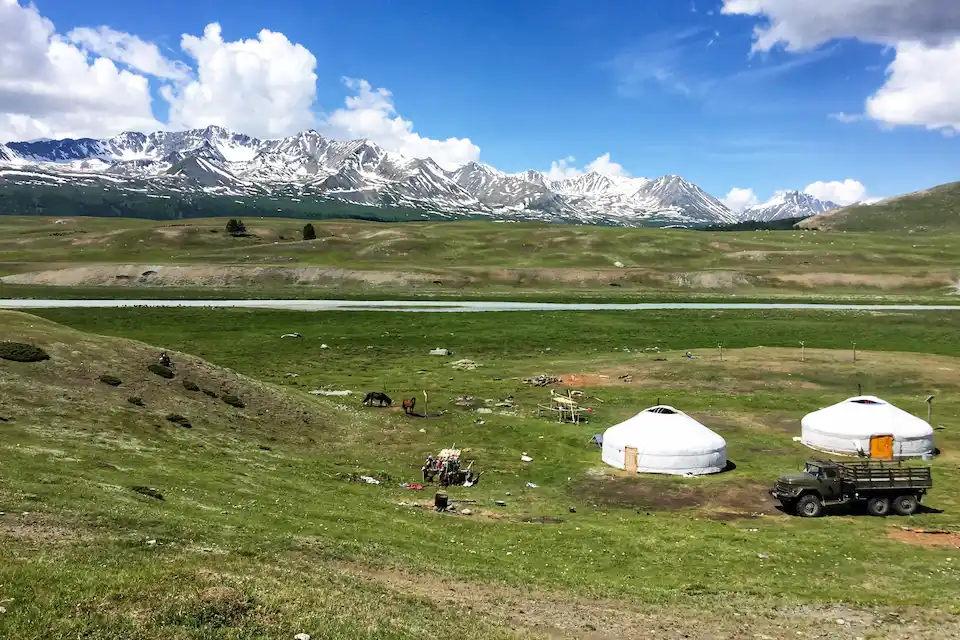
Nomad Homestay & Western Mongolia Classic
10 days · Easy · Summer · From USD 1,800
Our gentlest itinerary: two multi-night family homestays, easy day hikes and short rides.
Want a private trip, a different season, or to combine the mountains with a festival? Ask us about a private trip.
Altai Mountains: FAQ
Where are the Altai Mountains?
The Altai Mountains are shared by Russia, Kazakhstan, China and Mongolia. In Mongolia they run southeast from the far western tip of the country, where the borders of Mongolia, Russia and China meet. Most trips start from Ölgii in Bayan-Ölgii province.
What is the highest mountain in the Mongolian Altai?
Khüiten Peak (4,374 m), Mongolia’s highest point, in the Tavan Bogd massif of Altai Tavan Bogd National Park. Climbing it is a guided glacier ascent. Most trekkers reach nearby Malchin Peak (4,050 m) on a non-technical hike instead.
When is the best time to visit the Altai Mountains?
June to September for trekking, riding and homestays; mid-September to early October for the eagle festivals; and mid-February to April for the eagle hunters’ winter migration, when conditions are severe.
How do I get to the Altai Mountains?
Fly from Ulaanbaatar to Ölgii, then continue by 4×4 on unpaved roads. Our trips start and end in Ölgii.
Do I need a permit?
Yes. You need a permit to travel in the border area, and there is an entrance fee for Altai Tavan Bogd National Park. On our tours we arrange the permit for you, and the fees are included.
Do I need trekking or climbing experience?
No. Our Altai trips range from easy homestays to challenging treks. Only the Khüiten Peak climb is technical, and it needs a professional mountain guide and climbing equipment.
What is the difference between the Altai Mountains, Altai Tavan Bogd and Khoton and Khurgan Lakes?
The Altai Mountains are the whole range across western Mongolia. Altai Tavan Bogd National Park protects its highest corner, with Khüiten Peak and the Potanin Glacier. Khoton and Khurgan Lakes are twin alpine lakes in the south of the park.
Explore nearby
- Altai Tavan Bogd National Park: Khüiten Peak, the Potanin Glacier and the Mongolian Altai rock art
- Khoton & Khurgan Lakes: twin alpine lakes and summer camps in the south of the park
- Bayan-Ölgii: Mongolia’s Kazakh province and home of the eagle hunters
- Western Mongolia: eagle hunters, nomadic families and the Altai’s highest peaks
Plan your trip to the Altai Mountains
Trek to the glaciers in summer, meet the eagle hunters in autumn or follow a family’s migration in winter. Our guides grew up in these valleys and arrange the permit, transport, camps and horses.
Tell us your dates, group size and what you’d like to do, and we’ll help you build the right trip.
Or WhatsApp us: +976 9942 5394