Destination · Western Mongolia
Tsambagarav National Park
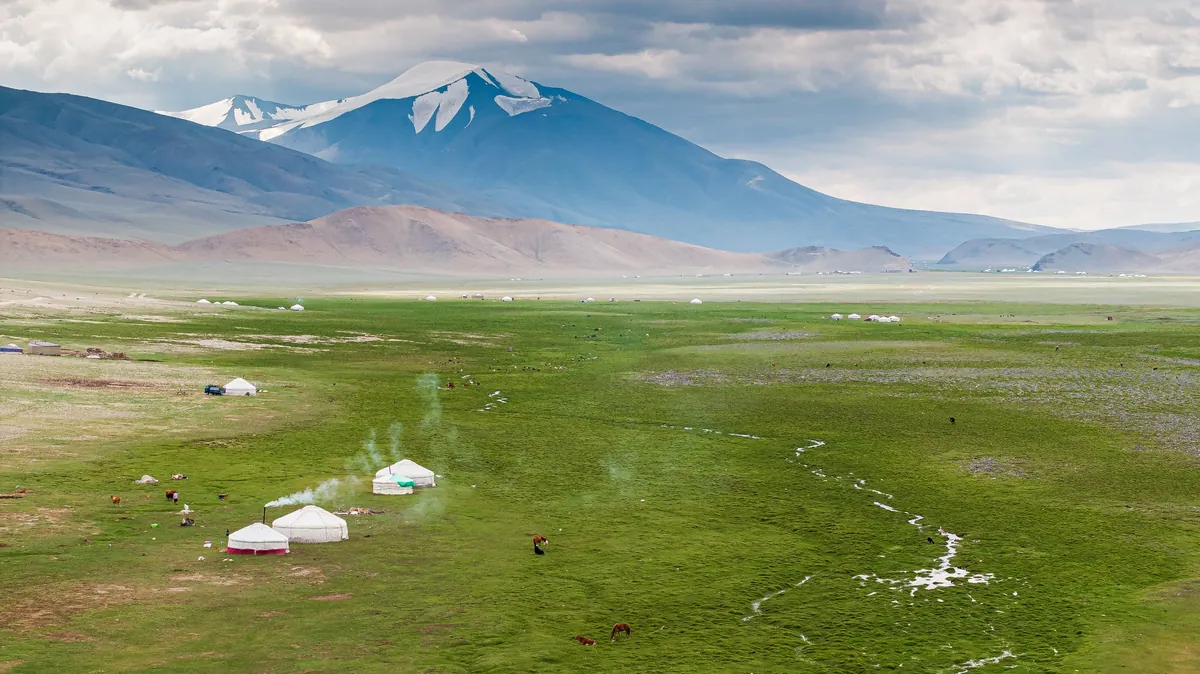
A glaciated massif in the Mongolian Altai, whose foothills are summer pasture for nomadic and eagle-hunter families.
Photo: Yerlan Sh / Sayat Travel.
Where
Bayan-Ölgii and Khovd provinces, western Mongolia
Highest peak
Tsast Uul, 4,082 m
From Ölgii
About 70 km to the summer pastures
Season
June–September
The park · Tsambagarav Uul · Wildlife · Nomadic families · Things to do · Planning a visit · FAQ
Where is Tsambagarav National Park?
Tsambagarav National Park protects the Tsambagarav massif in the Mongolian Altai of western Mongolia. The mountain rises on the border between Bayan-Ölgii and Khovd provinces, and the park was established in 2000 to protect its glaciers, high pastures and wildlife.
The park’s summer pastures are roughly 70 km from Ölgii, the main town of Bayan-Ölgii province, which has flights from Ulaanbaatar. Tsambagarav is part of the wider Altai Mountains, but it stands apart from the main range around Altai Tavan Bogd on the borders with Russia and China.
What is Tsambagarav Uul?
Uul is the Mongolian word for mountain, so Tsambagarav Uul simply means Tsambagarav Mountain. It is a stand-alone, permanently snow-capped massif, and its highest peak is Tsast Uul, at 4,082 m. You may also see the area called the Tsambagarav Mountains.

Landscapes and wildlife
The park is a glacial landscape: permanent snow and ice on the high summits, with valleys and foothills below that serve as summer pasture.
Wildlife native to Tsambagarav includes argali (wild mountain sheep), ibex and snow leopards. These animals are present in the area, but sightings are never guaranteed, especially of the shy and rarely seen snow leopard.
Nomadic families at Tsambagarav
From June to September, nomadic families, including eagle-hunter families, bring their herds to Tsambagarav. The foothills of the mountain are their summer pasture, and their gers dot the valleys below the snow.
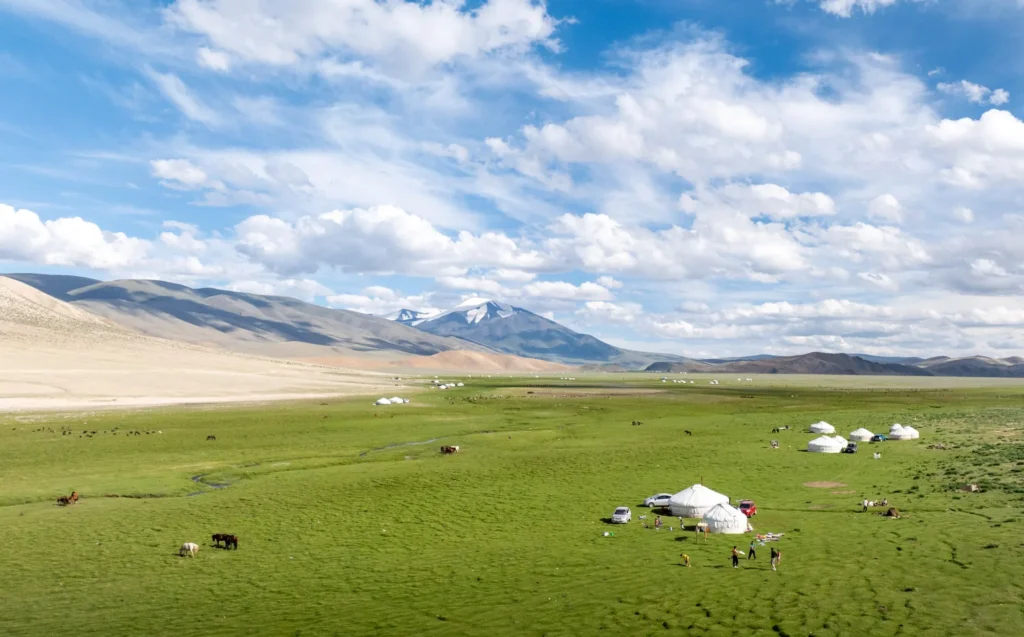
Visiting a family here means being a guest in a working household, where the day follows the animals and the weather. Follow your hosts’ lead, and ask your guide before photographing people or their homes. Read what to expect when staying with a nomadic family.
Things to do in Tsambagarav National Park
We run trips in the area from June through September. Depending on your itinerary, you can:
- Stay with a nomadic eagle-hunter family on their summer pasture.
- Take part in cultural experiences with herding families and learn about daily life on the pasture.
- Ride horses across the foothills and valleys.
- Hike below the snow-capped massif.
- Photograph local nomadic life and the mountain landscapes.
Planning a visit to Tsambagarav
- When to go: June to September, when families are on their summer pastures and our trips run.
- Getting there: fly from Ulaanbaatar to Ölgii, where our trips start. The summer pastures at Tsambagarav are roughly 70 km from Ölgii by 4×4.
- Permit: a park permit is required. On our tours, our agent arranges and pays for it in advance.
Our nomadic eagle-hunter family homestay visits Tsambagarav, with family stays, cultural experiences, horse riding, hiking and photography. We can also include the park in a private trip or combine it with other places in Western Mongolia.
Want to see Tsambagarav? Ask us about a trip.
Tsambagarav National Park: FAQ
Where is Tsambagarav National Park?
In the Mongolian Altai of western Mongolia, around Tsambagarav Mountain on the border between Bayan-Ölgii and Khovd provinces. Its summer pastures are roughly 70 km from Ölgii.
Is Tsambagarav Uul the same as Tsambagarav National Park?
Tsambagarav Uul is the mountain; uul means mountain in Mongolian. Its highest peak is Tsast Uul, at 4,082 m. Tsambagarav National Park is the protected area around it.
When is the best time to visit Tsambagarav?
June to September. This is when nomadic families, including eagle-hunter families, are on their summer pastures in the foothills, and when our trips run.
Do I need a permit?
Yes, a park permit is required. On our tours, our agent arranges and pays for it in advance.
What wildlife lives at Tsambagarav?
Wildlife native to the park includes argali (wild mountain sheep), ibex and snow leopards. They are present in the area, but sightings are never guaranteed.
Explore nearby
- Altai Mountains: the wider range across western Mongolia
- Altai Tavan Bogd National Park: Khüiten Peak, the Potanin Glacier and the Mongolian Altai rock art
- Bayan-Ölgii: Mongolia’s Kazakh province and home of the eagle hunters
- Western Mongolia: eagle hunters, nomadic families and the Altai’s highest peaks
Plan your trip to Tsambagarav
Tell us your dates, group size and what you’d like to do, and we’ll help you build the right trip.
Or WhatsApp us: +976 9942 5394