When people hear the word Gobi, they often imagine an endless sea of sand. But Mongolia’s Gobi is far more varied than that.
Across the southern part of Mongolia, the landscape changes constantly. There are enormous sand dunes, red cliffs, rocky desert, mountains, narrow valleys and wide open spaces where nomadic families still live with their animals.
For travelers, this variety is one of the biggest surprises of a journey through the Gobi. You can spend the morning walking through a mountain valley, travel across wide desert landscapes during the afternoon, and finish the day watching the sunset over enormous sand dunes.
The Gobi is not simply a place covered in sand. It is a huge and constantly changing landscape.
A Desert of Mountains, Cliffs and Valleys
The Gobi is often described simply as a desert, but that description can give the wrong impression.
Much of the landscape is rocky or gravel-covered rather than sandy. Mountain ranges rise from the desert, valleys cut through the landscape, and colorful cliffs appear seemingly in the middle of nowhere.
This changing landscape is what makes traveling through the Gobi so interesting.
Rather than staying in one type of environment, a journey takes you through several different landscapes, each with its own character.
For photographers especially, the changing light can completely transform the landscape. The same cliffs, mountains or dunes can look completely different in the morning, afternoon and evening.
Khongoryn Els: The Great Sand Dunes
Of course, there really are enormous sand dunes in the Gobi.
Khongoryn Els is one of the most spectacular examples.
The dunes stretch across the landscape like a giant wall of sand, with some areas rising dramatically above the surrounding desert.
Walking on the dunes can be surprisingly demanding. The sand moves beneath your feet as you climb, but reaching the higher parts gives you a wide view across the surrounding desert.
The dunes are particularly beautiful around sunset, when the changing light creates long shadows across the sand.
For many visitors, this is the image they imagined when they first heard the word “Gobi.”
But it is only one part of the story.
Yolyn Am: Ice in the Gobi
One of the most surprising places in the Gobi is Yolyn Am, a deep mountain valley in the Gurvan Saikhan area.
Here, the landscape changes completely.
Instead of wide open dunes, you enter a narrow valley surrounded by mountains. The valley creates a much cooler environment than the surrounding desert.
One of the reasons Yolyn Am became famous is its ice, which can remain in the valley into the warmer part of the year.
This is one of the moments when travelers realize how different the Gobi can be from the desert they imagined.
A place that people expect to be hot, dry and covered in sand can contain mountain valleys and ice.
Bayanzag and the Flaming Cliffs
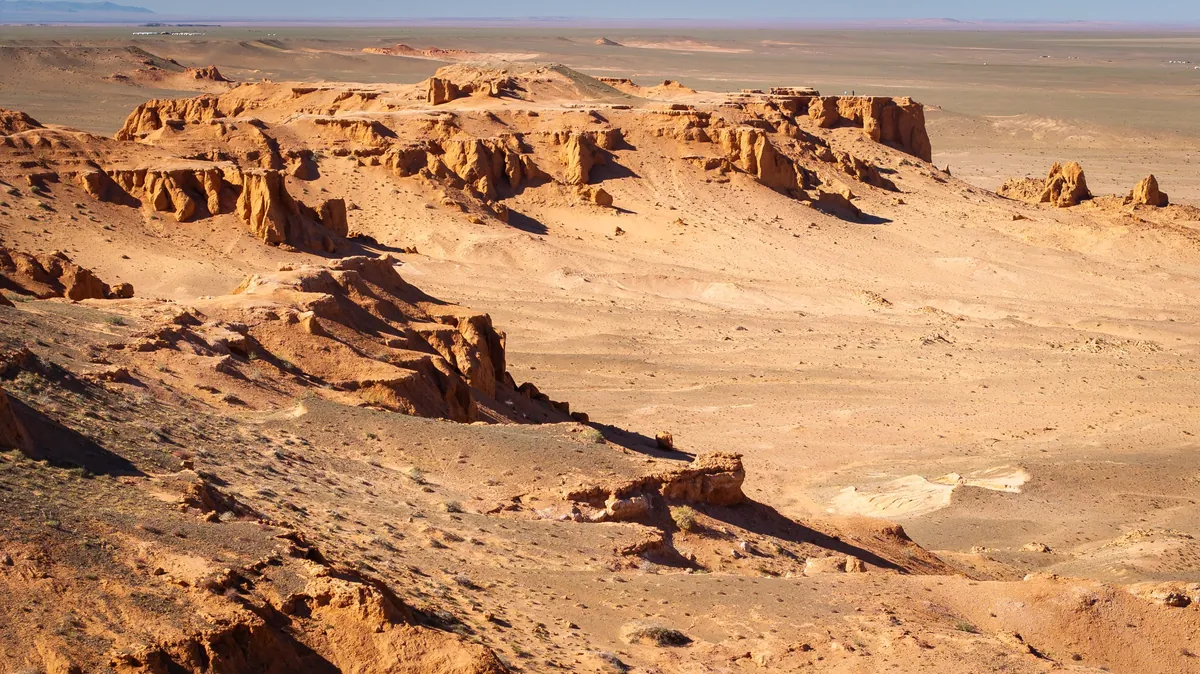
Another completely different landscape can be found at Bayanzag, better known internationally as the Flaming Cliffs.
The red and orange cliffs stand out dramatically against the surrounding desert.
The area is also famous for its connection with dinosaur discoveries, making it one of the most interesting places to visit for travelers interested in Mongolia’s prehistoric past.
Walking through Bayanzag is not simply about looking at a famous viewpoint. The landscape itself is part of the experience.
The colors become particularly striking as the sunlight changes, which is why many travelers enjoy spending time there around the evening.
Wildlife in the Gobi
The Gobi may look empty at first, but it is home to wildlife adapted to some of the harshest conditions in Mongolia.
Traveling through the desert gives visitors opportunities to see animals living in this enormous landscape.
Wild Bactrian camels are one of the animals most strongly associated with the Gobi, while other desert and mountain species can also be encountered depending on the area and season.
For travelers used to densely populated places, one of the remarkable things about the Gobi is how much space there is.
You can travel for long periods without seeing another vehicle or settlement, and then suddenly encounter a nomadic family, a herd of animals or wildlife moving across the landscape.
Meeting Nomadic Families in the Gobi
The Gobi is also home to nomadic families.
For many travelers, meeting these families adds an important human element to the journey.
Nomadic life in the Gobi is closely connected to animals and the availability of water and pasture. Families have adapted their lives to the desert environment and move according to seasonal conditions.
A visit can provide an opportunity to see how families live, care for their animals and maintain their traditional way of life in one of the world’s great desert regions.
This is another reason why the Gobi should not be thought of as an empty wilderness.
People have lived and traveled through this landscape for generations.
Traveling Through the Gobi
A Gobi journey is an adventure in itself.
The distances between places can be large, and much of the journey takes place far from major towns.
Travel is normally by 4×4 vehicle, allowing travelers to reach remote valleys, dunes and desert landscapes that are difficult to access by ordinary vehicles.
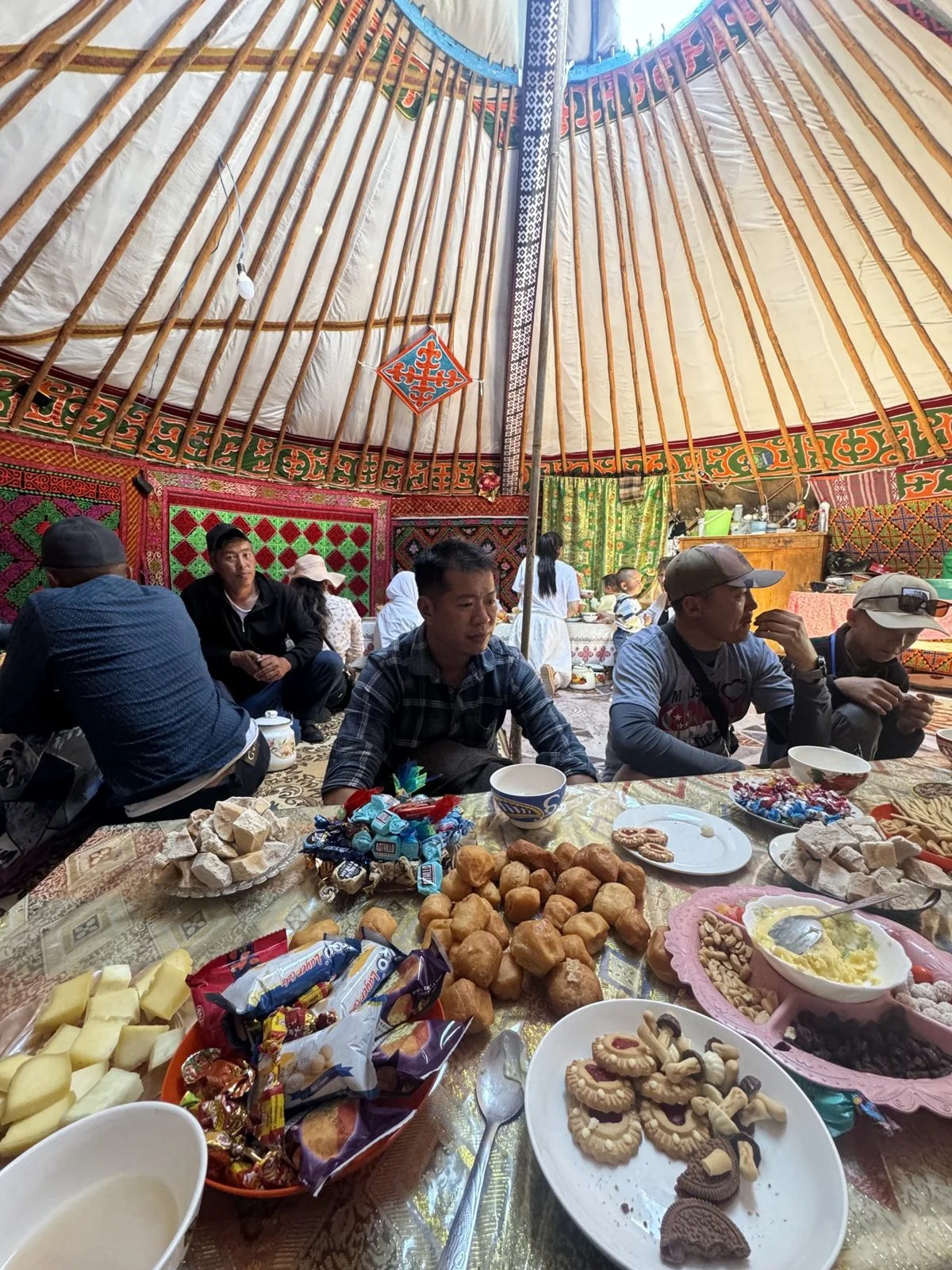
Accommodation can include ger camps and, depending on the itinerary, stays with local families.
The long distances are part of the experience. There are days when the journey itself becomes the attraction — watching the landscape change outside the vehicle window, stopping for photographs, meeting people along the way and seeing how the colors of the desert change with the light.
This is not a destination where you need to rush from one attraction to another.
The spaces between the famous places are part of the Gobi experience.
When Is the Best Time to Visit the Gobi?
The best time to visit depends on what you want from your journey.
The warmer months are generally the most popular time for traveling through Mongolia, when roads and remote areas are easier to access and the weather is more suitable for outdoor activities.
Spring and autumn can offer a different experience, with changing weather and fewer travelers.
Winter is a completely different Gobi experience. Temperatures can be extremely cold, but the desert landscape under winter conditions has its own beauty.
For most travelers interested in combining comfortable travel, hiking, photography and nomadic experiences, we would normally consider the warmer seasons first.
However, the Gobi changes throughout the year, so there is no single season that defines the region.
Why the Gobi Isn’t Just Sand
The first thing many travelers discover in the Gobi is that their idea of a desert was too simple.
The Gobi can be:
sand dunes.
red cliffs.
rocky desert.
mountains.
deep valleys.
ice.
wildlife.
nomadic families.
And enormous skies stretching far beyond the horizon.
That variety is what makes the Gobi such a special part of Mongolia.
You come expecting a desert.
You leave remembering a landscape much bigger and more varied than the word “desert” suggests.
Explore the Gobi With Sayat Travel
At Sayat Travel, our Gobi journeys are designed to experience more than just the famous sand dunes.
Our Gobi Desert Expedition combines the desert landscapes, dunes, mountains, valleys and cultural experiences that make southern Mongolia so distinctive.
You can also explore our Gobi Desert destination guide to learn more about the region before planning your journey.